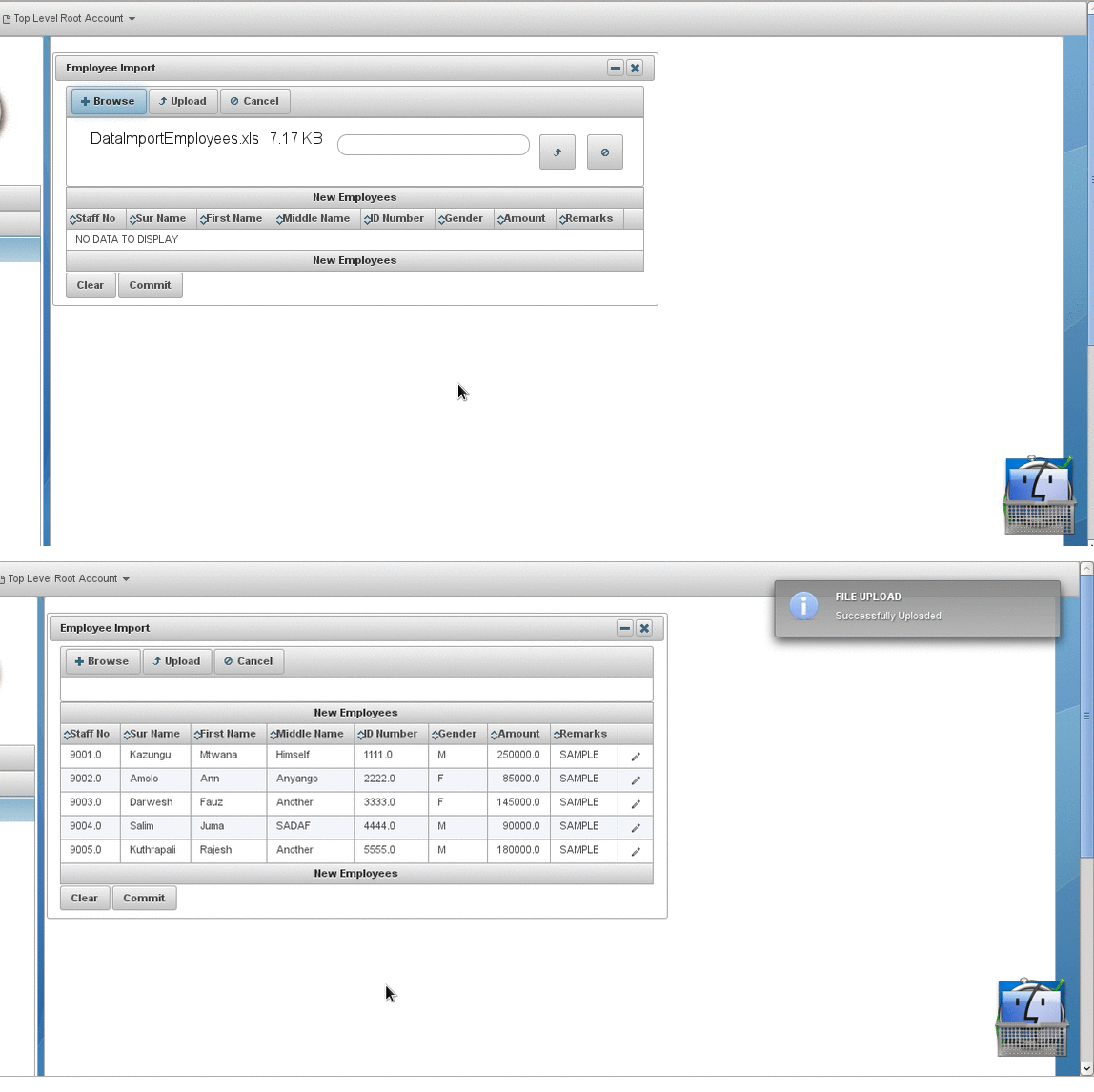
Requirements
1. temporary table to hold the imported data
2. a preformated XL file 3. PF componenets (datatable and fileupload)
4. ActionListeners
5. pl/sql function to process data from the holding table into the necessary table(s)
1: public static HtmlPanelGrid buildGridForm(XMLElement pg, LazyModel _model, DataSource d, HashMap<String,String> _props, int _userId, int _orgId){
2: setDs(d);
3: FacesContext fc = FacesContext.getCurrentInstance();
4: Application application = fc.getApplication();
5: ExpressionFactory ef = application.getExpressionFactory();
6: ELContext elc = fc.getELContext();
7: HtmlPanelGrid pGrid = new HtmlPanelGrid();
8: boolean embedded = false;
9: String user = pg.getAttribute("user");
10: if(user != null){
11: log.info("Building GRIDFORM.. user=" + user + ",_userId = " + _userId);
12: _props.put(user,"" + _userId + "");
13: }
14: if(_model != null)
15: embedded = true;
16: if(embedded) //if xpandable
17: pGrid.setId("xgf" + pg.getAttribute("key","x") + pg.getAttribute("keyfield","kf").replace("_",""));
18: else
19: pGrid.setId("gf" + pg.getAttribute("key","x") + pg.getAttribute("keyfield","kf").replace("_",""));
20: pGrid.setColumns(Integer.parseInt(pg.getAttribute("columns","4")));
21: pGrid.setTitle(pg.getAttribute("title","NO TITLE"));
22: pGrid.setStyle(pg.getAttribute("style","font-size:11px; text-align:left; padding-right:0px"));
23: pGrid.setStyleClass(pg.getAttribute("styleclass",""));
24: pGrid.setCellpadding(pg.getAttribute("cellpadding","0 px"));
25: pGrid.setCellspacing(pg.getAttribute("cellspacing","5 px"));
26: pGrid.setRendered(Boolean.parseBoolean(pg.getAttribute("visible","true")));
27: LazyModel parentModel = null;
28: boolean isChild = false; //linked to another datatable
29: //boolean isInput = false; //gets input from another datatable
30: //boolean isNested = false; //has nested children table within a table
31: //boolean isNew = Boolean.parseBoolean(pg.getAttribute("new","false"));
32: String link = pg.getAttribute("link","");
33: String input = pg.getAttribute("input","");
34: if(!link.equals("")){ //if a child
35: //log.info("PARENT for FORM link = " + link);
36: DataTable parent = (DataTable)FacesAccessor.getUIComponent("mainForm:dt" + link.split(":")[0] + (link.split(":")[1]).replace("_",""));
37: //log.info("FOUND parent id = " + parent.getId()); //
38: isChild = true;
39: parentModel = (LazyModel)parent.getValue();
40: }
41: else if(!input.equals("")){ //if a child
42: //log.info("PARENT for FORM link = " + link);
43: DataTable parent = (DataTable)FacesAccessor.getUIComponent("mainForm:dt" + input.split(":")[0] + (input.split(":")[1]).replace("_",""));
44: //log.info("FOUND parent id = " + parent.getId()); //
45: //isChild = true;
46: parentModel = (LazyModel)parent.getValue();
47: }
48: //activiti task variables
49: Map<String,Object> tVars = new HashMap<String, Object>();
50: for(XMLElement el : pg.getElements()) {
51: //label first
52: OutputLabel label = new OutputLabel();
53: label.setId("lbl" + pGrid.getId() + "_" + el.getValue());
54: label.setValue(el.getAttribute("title"));
55: pGrid.getChildren().add(label);
56: boolean isInput = false;
57: if(el.getAttribute("input","false").equals("true"))
58: isInput = true;
59: //activiti task variables
60: if(!el.getAttribute("var","").equals("")){
61: //get XML ELEMENTS marked with var="true" and use as Activiti Task Variables
62: tVars.put(el.getAttribute("var"),"");
63: }
64: // if(el.getName().equals("USERFIELD")){
65: // InputText txtUser = new InputText();
66: // txtUser.setId("txt" + pGrid.getId() + "_" + el.getValue());
67: // txtUser.setValue("loggedInUser");
68: // }
69: // else if(el.getName().equals("DEFAULT")){
70: // InputText txtDefault = new InputText();
71: // txtDefault.setId("txt" + pGrid.getId() + "_" + el.getValue());
72: // txtUser.setValue("loggedInUser");
73: // }
74: String defaultVal = el.getAttribute("defaultvalue");
75: if(el.getName().equals("TEXTFIELD")){
76: if(embedded){
77: InputText txt = new InputText();
78: txt.setId("txt" + pGrid.getId() + "_" + el.getValue());
79: txt.setSize(Integer.parseInt(el.getAttribute("w","25")));
80: //ValueExpression embVE = FacesAccessor.createValueExpression(elc, "#{item[" + _model.getDataIndex(el.getValue()) + "]}", String.class);
81: ValueExpression embVE = FacesAccessor.createValueExpression(elc, "#{item[" + _model.getDataIndex(el.getValue()) + "]}", String.class);
82: txt.setValueExpression("value",embVE);
83: txt.addClientBehavior("save", EventsManager.createAjaxBehaviour("inplaceUpdate","@parent"));
84: //txt.addClientBehavior("cancel", EventsManager.createAjaxBehaviour("inPlaceSave","@none"));
85: if(!el.getAttribute("tooltip","").equals(""))
86: txt.setTitle(el.getAttribute("tooltip"));
87: //txt.setValidator();
88: if(!el.getAttribute("requiredmessage","").equals("")){ //if there is a requiredmessage
89: txt.setRequired(true);
90: txt.setRequiredMessage(el.getAttribute("requiredmessage"));
91: }
92: label.setFor("txt" + pGrid.getId() + "_" + el.getValue());
93: Inplace inp = new Inplace();
94: //inp.setLabel(el.getAttribute("title","No Title"));
95: //inp.setValueExpression("label",FacesAccessor.createValueExpression(elc, "#{item[" + _model.getDataIndex(el.getValue()) + "]}", String.class));
96: inp.setValueExpression("label",FacesAccessor.createValueExpression(elc, "#{item[" + _model.getDataIndex(el.getValue()) + "]}", String.class));
97: inp.setEmptyLabel("EMPTY");
98: inp.setEditor(true);
99: inp.setSaveLabel("Save");
100: inp.setCancelLabel("Cancel");
101: inp.setEvent(el.getAttribute("event","click"));
102: inp.setToggleable(true);
103: inp.getChildren().add(txt);
104: pGrid.getChildren().add(inp);
105: }
106: else if(el.getAttribute("inline","false").equals("false")){
107: //log.info("FOUND TEXTFIELD value = " + el.getValue());
108: InputText txt = new InputText();
109: txt.setId("txt" + pGrid.getId() + "_" + el.getValue());
110: txt.setSize(Integer.parseInt(el.getAttribute("w","20")));
111: if (isChild || isInput){ //CORRECTION NEEDED HERE... if isInput i need to use onNewValue event
112: txt.setValueExpression("value",FacesAccessor.createValueExpression(elc, "#{eventManager.currentRow[" + parentModel.getDataIndex(el.getValue()) + "]}", String.class));
113: txt.addClientBehavior("blur", EventsManager.createAjaxBehaviour("onValueChange","@none"));
114: //if isInput look for mechanism to inject the value directly to newDataMap in DashboardBacker
115: }
116: else{ //means new
117: txt.addClientBehavior("blur", EventsManager.createAjaxBehaviour("onNewValue","@none"));
118: if (defaultVal != null){
119: txt.setValue(defaultVal);
120: }
121: }
122: if(!el.getAttribute("tooltip","").equals(""))
123: txt.setTitle(el.getAttribute("tooltip"));
124: //txt.setValidator();
125: if(!el.getAttribute("requiredmessage","").equals("")){ //if there is a requiredmessage
126: txt.setRequired(true);
127: txt.setRequiredMessage(el.getAttribute("requiredmessage"));
128: }
129: label.setFor("txt" + pGrid.getId() + "_" + el.getValue());
130: // attach message component
131: // Message msg = new Message();
132: // msg.setId("msg_" + pGrid.getId() + "_" + el.getValue());
133: // msg.setFor("txt" + pGrid.getId() + "_" + el.getValue());
134: // pGrid.getChildren().add(msg);
135: pGrid.getChildren().add(txt);
136: }
137: else{ //if inline .. this is only usable when EDITING
138: InputText txt = new InputText();
139: txt.setId("txt" + pGrid.getId() + "_" + el.getValue());
140: txt.setSize(Integer.parseInt(el.getAttribute("w","20")));
141: if (isChild || isInput){
142: txt.setValueExpression("value",FacesAccessor.createValueExpression(elc, "#{eventManager.currentRow[" + parentModel.getDataIndex(el.getValue()) + "]}", String.class));
143: txt.addClientBehavior("save", EventsManager.createAjaxBehaviour("inplaceUpdate","@parent"));
144: }
145: //txt.setValidator();
146: if(!el.getAttribute("requiredmessage","").equals("")){ //if there is a requiredmessage
147: txt.setRequired(true);
148: txt.setRequiredMessage(el.getAttribute("requiredmessage"));
149: }
150: label.setFor("txt" + pGrid.getId() + "_" + el.getValue());
151: Inplace inp = new Inplace();
152: //inp.setLabel(el.getAttribute("title","No Title"));
153: inp.setValueExpression("label",FacesAccessor.createValueExpression(elc, "#{eventManager.currentRow[" + parentModel.getDataIndex(el.getValue()) + "]}", String.class));
154: inp.setEmptyLabel("EMPTY");
155: inp.setEditor(Boolean.parseBoolean(el.getAttribute("editorbuttons","false")));
156: inp.setSaveLabel("Save");
157: inp.setCancelLabel("Cancel");
158: inp.setEvent(el.getAttribute("event","click"));
159: inp.setToggleable(true);
160: inp.getChildren().add(txt);
161: pGrid.getChildren().add(inp);
162: }
163: }
164: else if(el.getName().equals("AUTOCOMPLETE")){
165: log.info("FOUND AUTOCOMPLETE");
166: //AutoComplete autoComp = new AutoComplete();
167: //MyAutoComplete autoComp = new MyAutoComplete(); //my implementation
168: AutoComplete autoComp = new AutoComplete();
169: autoComp.setId("ac" + pGrid.getId() + "_" + el.getValue());
170: autoComp.setForceSelection(true);
171: autoComp.setRequired(true);
172: autoComp.setRequiredMessage(el.getAttribute("requiredmessage","Required"));
173: autoComp.setMinQueryLength(Integer.parseInt(el.getAttribute("querylength","3")));
174: autoComp.setMaxlength(Integer.parseInt(el.getAttribute("maxlength","10")));
175: autoComp.setMultiple(Boolean.parseBoolean(el.getAttribute("multiple","false")));
176: autoComp.setQueryDelay(Integer.parseInt(el.getAttribute("delay","500")));
177: //autoComp.setDropdown(true);
178: //autoComp.setConverter(el.getAttribute("converter","org.elegance.primetime.util.DefaultConverter"));
179: //autoComp.setValueChangeListener()
180: //autoComp.setVar("obj");
181: //autoComp.setItemLabel("#{obj.toString()}");
182: //autoComp.setItemValue("#{obj}");
183: //autoComp.setProcess();
184: //autoComp.setValue("testvalue");
185: //autoComp.setLptable(el.getAttribute("lptable"));
186: //autoComp.setLpfield(el.getAttribute("lpfield"));
187: //autoComp.setLpkey(el.getAttribute("lpkey"));
188: //MethodExpression cME = FacesAccessor.createMethodExpression("#{eventManager.onComplete(\"" + autoComp.getValue() + "\",\"" + el.getAttribute("lptable") + "\",\"" + el.getAttribute("lpfield") + "\")}",List.class, String.class);
189: MethodExpression cME = FacesAccessor.createMethodExpression("#{eventManager.onComplete}",List.class, String.class);
190: autoComp.setCompleteMethod(cME);
191: // MethodExpression cVE = FacesAccessor.createMethodActionListener("#{eventManager.onValueChange}",Void.class, String.class);
192: // autoComp.setValueChangeListener(cVE);
193: //ValueExpression colValueExp = FacesAccessor.createValueExpression(elc, "#{imageBean.getImageBytes(\"select " + el.getValue() + " from " + pg.getAttribute("table","table") + " where " + pg.getAttribute("keyfield","kf") + " = ?\")}", DefaultStreamedContent.class);
194: //START TESTING params
195: // UIParameter paramTable = new UIParameter();
196: // UIParameter paramField = new UIParameter();
197: // UIParameter paramKey = new UIParameter();
198: //
199: // paramTable.setName("lptable");
200: // //paramTable.setValue(el.getAttribute("lptable"));
201: // paramTable.setValue("p_entity");
202: //
203: // paramField.setName("lpfield");
204: // paramField.setValue(el.getAttribute("lpfield"));
205: //
206: // paramKey.setName("lpkey");
207: // paramKey.setValue(el.getAttribute("lpkey"));
208: //
209: // autoComp.getChildren().add(paramTable);
210: // autoComp.getChildren().add(paramField);
211: // autoComp.getChildren().add(paramKey);
212: //END TESTING params
213: label.setFor("ac" + pGrid.getId() + "_" + el.getValue());
214: // if (isChild || isInput){ //CORRECTION NEEDED HERE... if isInput i need to use onNewValue event
215: // autoComp.setValueExpression("value",FacesAccessor.createValueExpression(elc, "#{eventManager.currentRow[" + parentModel.getDataIndex(el.getValue()) + "]}", String.class));
216: // autoComp.addClientBehavior("itemSelect", EventsManager.createAjaxBehaviour("onValueChange","@none"));
217: // }
218: // else{
219: // autoComp.addClientBehavior("itemSelect", EventsManager.createAjaxBehaviour("onNewValue","@none"));
220: // }
221: pGrid.getChildren().add(autoComp);
222: }
223: else if(el.getName().equals("TEXTAREA")){
224: InputTextarea txtA = new InputTextarea();
225: txtA.setId("txtA" + pGrid.getId() + "_" + el.getValue());
226: txtA.setLabel("INLINE LABEL");
227: if (isChild || isInput){
228: txtA.setValueExpression("value",FacesAccessor.createValueExpression(elc, "#{eventManager.currentRow[" + parentModel.getDataIndex(el.getValue()) + "]}", String.class));
229: txtA.addClientBehavior("blur", EventsManager.createAjaxBehaviour("onValueChange","@parent"));
230: }
231: else{ //means new
232: txtA.addClientBehavior("blur", EventsManager.createAjaxBehaviour("onNewValue","@form"));
233: //TESTING ROBOT.. WORKS PERFECTLY
234: //txtA.addClientBehavior("focus", EventsManager.createAjaxBehaviour("runRobot","@this"));
235: if (defaultVal != null){
236: txtA.setValue(defaultVal);
237: }
238: }
239: txtA.setRows(Integer.parseInt(el.getAttribute("rows","5")));
240: txtA.setCols(Integer.parseInt(el.getAttribute("cols","25")));
241: //txtA.setRendered(Boolean.parseBoolean(el.getAttribute("visible","true")));
242: label.setFor("txtA" + pGrid.getId() + "_" + el.getValue());
243: pGrid.getChildren().add(txtA);
244: }
245: else if(el.getName().equals("CHECKBOX")){
246: SelectBooleanCheckbox chk = new SelectBooleanCheckbox();
247: chk.setId("chk" + pGrid.getId() + "_" + el.getValue());
248: chk.setLabel("INLINE LABEL");
249: if (isChild || isInput){
250: chk.setValueExpression("value",FacesAccessor.createValueExpression(elc, "#{eventManager.currentRow[" + parentModel.getDataIndex(el.getValue()) + "]}", String.class));
251: chk.addClientBehavior("blur", EventsManager.createAjaxBehaviour("onValueChange","@parent"));
252: }
253: else{ //means new
254: chk.addClientBehavior("blur", EventsManager.createAjaxBehaviour("onNewValue","@form"));
255: //TESTING ROBOT.. WORKS PERFECTLY
256: //txtA.addClientBehavior("focus", EventsManager.createAjaxBehaviour("runRobot","@this"));
257: if (defaultVal != null){
258: chk.setValue(defaultVal);
259: }
260: }
261: label.setFor("chk" + pGrid.getId() + "_" + el.getValue());
262: pGrid.getChildren().add(chk);
263: }
264: else if(el.getName().equals("TEXTDECIMAL")){
265: InputText txtD = new InputText();
266: txtD.setId("txtD" + pGrid.getId() + "_" + el.getValue());
267: txtD.setType("number");
268: txtD.setSize(Integer.parseInt(el.getAttribute("w","20")));
269: txtD.setStyle(el.getAttribute("style","text-align: right"));
270: if(!el.getAttribute("tooltip","").equals(""))
271: txtD.setTitle(el.getAttribute("tooltip"));
272: if (isChild || isInput){
273: txtD.setValueExpression("value",FacesAccessor.createValueExpression(elc, "#{eventManager.currentRow[" + parentModel.getDataIndex(el.getValue()) + "]}", Double.class));
274: txtD.addClientBehavior("blur", EventsManager.createAjaxBehaviour("onValueChange","@form"));
275: }
276: else{ //means new
277: txtD.addClientBehavior("blur", EventsManager.createAjaxBehaviour("onNewValue","@none"));
278: if (defaultVal != null){
279: txtD.setValue(defaultVal);
280: }
281: }
282: if(!el.getAttribute("requiredmessage","").equals("")){ //if there is a requiredmessage
283: txtD.setRequired(true);
284: txtD.setRequiredMessage(el.getAttribute("requiredmessage"));
285: }
286: txtD.setRendered(Boolean.parseBoolean(el.getAttribute("visible","true")));
287: label.setFor("txtD" + pGrid.getId() + "_" + el.getValue());
288: pGrid.getChildren().add(txtD);
289: }
290: else if(el.getName().equals("INPUTMASK")){
291: InputMask txtMask = new InputMask();
292: txtMask.setId("mask" + pGrid.getId() + "_" + el.getValue());
293: txtMask.setSize(Integer.parseInt(el.getAttribute("w","20")));
294: if(!el.getAttribute("style","").equals("")){
295: txtMask.setStyle(el.getAttribute("style"));
296: }
297: if (isChild || isInput){
298: txtMask.setValueExpression("value",FacesAccessor.createValueExpression(elc, "#{eventManager.currentRow[" + parentModel.getDataIndex(el.getValue()) + "]}", String.class));
299: txtMask.addClientBehavior("blur", EventsManager.createAjaxBehaviour("onValueChange","@form"));
300: }
301: else{ //means new
302: txtMask.addClientBehavior("blur", EventsManager.createAjaxBehaviour("onNewValue","@none"));
303: }
304: txtMask.setMask(el.getAttribute("mask",""));
305: label.setFor("mask" + pGrid.getId() + "_" + el.getValue());
306: pGrid.getChildren().add(txtMask);
307: }
308: // else if(el.getName().equals("GMAP")){
309: // log.info("CREATING map");
310: //
311: // GMap map = new GMap();
312: // MapModel model = new DefaultMapModel();
313: //
314: // map.setId("map" + pGrid.getId() + "_" + el.getValue());
315: // map.setWidgetVar(map.getId());
316: // map.setCenter(el.getAttribute("center","41.381542, 2.122893"));
317: // map.setZoom(Integer.parseInt(el.getAttribute("zoom","15")));
318: // map.setType(el.getAttribute("type","hybrid"));
319: // map.setStyle(el.getAttribute("style","width:400px;height:300px"));
320: //
321: // model.addOverlay(new Marker(new LatLng(36.879466, 30.667648), "M1"));
322: // map.setModel(model);
323: //
324: // pGrid.getChildren().add(map);
325: // }
326: else if(el.getName().equals("EDITOR")){ //'component does not implement Behaviour Interface'
327: Editor edt = new Editor();
328: //MethodExpression ee = FacesAccessor.createMethodExpression("#{eventManager.onNewValue}",Void.class, new Class[0]);
329: //edt.setValueChangeListener(ee);
330: edt.setId("edt" + pGrid.getId() + "_" + el.getValue());
331: if (isChild || isInput){
332: edt.setValueExpression("value",FacesAccessor.createValueExpression(elc, "#{eventManager.currentRow[" + parentModel.getDataIndex(el.getValue()) + "]}", String.class));
333: //edt.addClientBehavior("blur", EventsManager.createAjaxBehaviour("onValueChange","@form"));
334: }
335: //else{ //means new
336: //edt.addClientBehavior("blur", EventsManager.createAjaxBehaviour("onNewValue","@form"));
337: //}
338: edt.setWidth(Integer.parseInt(el.getAttribute("width","200")));
339: edt.setHeight(Integer.parseInt(el.getAttribute("heigth","100")));
340: edt.setControls(el.getAttribute("controls","bold italic underline strikethrough"));
341: edt.setRendered(Boolean.parseBoolean(el.getAttribute("visible","true")));
342: label.setFor("edt" + pGrid.getId() + "_" + el.getValue());
343: pGrid.getChildren().add(edt);
344: }
345: else if(el.getName().equals("TEXTDATE")){
346: //log.info("FOUND TEXTDATE value = " + el.getValue());
347: Calendar cal = new Calendar();
348: cal.setId("cal" + pGrid.getId() + "_" + el.getValue());
349: cal.setPattern("yyyy MMM dd");
350: cal.setNavigator(true);
351: //cal.setPages(3);
352: cal.setMode(el.getAttribute("mode","popup")); //button,inline,popup
353: //cal.setShowOn(String here);
354: cal.setYearRange(el.getAttribute("yearrange","1990:2020"));
355: //cal.setTimeOnly(true);
356: //cal.setShowWeek(true); //show week number
357: //cal.setShowButtonPanel(true); //Show TODAY and DONE
358: //cal.setImmediate(false); //process validations logic isexecuted at apply request values phase for this component
359: //cal.setSelectOtherMonths(true);
360: //cal.setShowOtherMonths(true);
361: //pattern="EEE, dd MMM, yyyy" showButtonPanel="true" navigator="true"
362: cal.setSize(Integer.parseInt(el.getAttribute("w","20")));
363: if (isChild || isInput){
364: //Date date = new SimpleDateFormat("MMMM d, yyyy", Locale.ENGLISH).parse(string);
365: //log.info("Trying Java Date Formatter ... " + new SimpleDateFormat("yyyyy MMMMM dd", Locale.ENGLISH).parse(new Date()));
366: cal.setValueExpression("value",FacesAccessor.createValueExpression(elc, "#{eventManager.currentRow[" + parentModel.getDataIndex(el.getValue()) + "]}", Date.class));
367: cal.addClientBehavior("dateSelect", EventsManager.createAjaxBehaviour("onValueChange","@form")); //or change or select
368: }
369: else{ //means new
370: cal.addClientBehavior("dateSelect", EventsManager.createAjaxBehaviour("onNewValue","@none"));
371: if (defaultVal != null){
372: cal.setValue(defaultVal);
373: }
374: }
375: cal.setRendered(Boolean.parseBoolean(el.getAttribute("visible","true")));
376: label.setFor("cal" + pGrid.getId() + "_" + el.getValue());
377: pGrid.getChildren().add(cal);
378: }//end if TEXTDATE
379: else if(el.getName().equals("COMBOLIST")){
380: SelectOneMenu cmblist = new SelectOneMenu();
381: cmblist.setId("cmblist" + pGrid.getId() + "_" + el.getValue());
382: label.setFor("cmblist" + pGrid.getId() + "_" + el.getValue());
383: List<XMLElement> data = el.getElements();
384: List<SelectItem> items = new ArrayList<SelectItem>();
385: for(XMLElement dt : data) {
386: if(dt.getName().equals("DATA")){ //HAS TO BE A DATA
387: items.add(new SelectItem(dt.getAttribute("key","-1"), dt.getValue()));
388: }//end if DATA
389: }
390: UISelectItems selectItems = new UISelectItems();
391: selectItems.setValue(items);
392: selectItems.setId("si" + pGrid.getId() + "_" + el.getValue());
393: cmblist.getChildren().add(selectItems);
394: if (isChild || isInput){
395: //log.info("COMBOLIST parentModel = " + (parentModel==null?"NO PARENT":"OK"));
396: cmblist.setValueExpression("value",FacesAccessor.createValueExpression(elc, "#{eventManager.currentRow[" + parentModel.getDataIndex(el.getValue()) + "]}", Object.class));
397: cmblist.addClientBehavior("change", EventsManager.createAjaxBehaviour("onValueChange","@form"));
398: }
399: else{ //means new
400: cmblist.addClientBehavior("change", EventsManager.createAjaxBehaviour("onNewValue","@none"));
401: }
402: pGrid.getChildren().add(cmblist);
403: }
404: else if (el.getName().equals("COMBOBOX")){
405: SelectOneMenu cmbbox = new SelectOneMenu();
406: cmbbox.setId("cmbbox" + pGrid.getId() + "_" + el.getValue());
407: //if heigtht is defined
408: if(!el.getAttribute("h","").equals("")){
409: cmbbox.setHeight(Integer.parseInt(el.getAttribute("h")));
410: }
411: label.setFor("cmbbox" + pGrid.getId() + "_" + el.getValue());
412: String wheresql = el.getAttribute("wheresql");
413: //the last argument is a 'suggestion/advice' as to the width of the array
414: List<Object[]> cdata = IOService.getListFromResultSet(getDs(), "SELECT " + (el.getAttribute("lpkey",el.getValue())) + "," + el.getAttribute("lpfield") + " FROM " + el.getAttribute("lptable") + (wheresql==null?"":" WHERE " + wheresql));
415: List<SelectItem> items = new ArrayList<SelectItem>();
416: items.add(new SelectItem("-1", "Select"));
417: for(Object[] dt : cdata) {
418: items.add(new SelectItem((Integer)dt[0], (String)dt[1]));
419: }
420: UISelectItems selectItems = new UISelectItems();
421: selectItems.setValue(items);
422: selectItems.setId("si" + pGrid.getId() + "_" + el.getValue());
423: cmbbox.getChildren().add(selectItems);
424: if (isChild || isInput){
425: if(el.getAttribute("input","false").equals("true")){
426: cmbbox.setValueExpression("value",FacesAccessor.createValueExpression(elc, "#{eventManager.currentRow[" + parentModel.getDataIndex(el.getValue()) + "]}", Integer.class));
427: cmbbox.setDisabled(true);
428: }
429: else{
430: cmbbox.setValueExpression("value",FacesAccessor.createValueExpression(elc, "#{eventManager.currentRow[" + parentModel.getDataIndex(el.getValue()) + "]}", Integer.class));
431: cmbbox.addClientBehavior("change", EventsManager.createAjaxBehaviour("onValueChange","@form")); //this may
432: }
433: }
434: else{ //means new
435: cmbbox.addClientBehavior("change", EventsManager.createAjaxBehaviour("onNewValue","@none"));
436: }
437: pGrid.getChildren().add(cmbbox);
438: }
439: else if(el.getName().equals("FIELDSET")){
440: log.info("FOUND FIELDSET id=" + el.getAttribute("id","no id"));
441: Fieldset fs = new Fieldset();
442: fs.setId("fs" + pGrid.getId() + "_" + el.getAttribute("id","k"));
443: fs.setLegend(el.getAttribute("legend","No Legend"));
444: HtmlPanelGrid fGrid = new HtmlPanelGrid();
445: fGrid.setColumns(2);
446: fGrid.setId("fgrid" + fs.getId());
447: for(XMLElement ell : el.getElements()) {
448: if(ell.getName().equals("TEXTFIELD")){
449: log.info("FIELDSET CHILD = " + ell.getName());
450: InputText fTxt = new InputText();
451: fTxt.setLabel("TESTING");
452: fTxt.setValue("TESTING");
453: fGrid.getChildren().add(fTxt);
454: }
455: else if(ell.getName().equals("TEXTAREA")){
456: fGrid.getChildren().add(new InputTextarea());
457: }
458: else if(ell.getName().equals("EDITOR")){
459: fGrid.getChildren().add(new Editor());
460: }
461: }
462: fs.getChildren().add(fGrid);
463: pGrid.getChildren().add(fs);
464: }//end if FIELDSET
465: // else if(el.getName().equals("FEEDREADER")){
466: // log.info("FOUND FEEDREADER title = " + el.getAttribute("title"));
467: //
468: // FeedReader fd = new FeedReader();
469: // fd.setId("fd" + pGrid.getId() + "_" + el.getAttribute("key","k"));
470: // fd.setValue(el.getAttribute("source","http://rss.news.yahoo.com/rss/sports"));
471: // fd.setVar("feed");
472: // fd.setRendered(true);
473: // fd.setSize(Integer.parseInt(el.getAttribute("size","10")));
474: //
475: //
476: // ValueExpression titleVE = FacesAccessor.createValueExpression(elc, "#{feed.title}", Object.class);
477: // ValueExpression contentVE = FacesAccessor.createValueExpression(elc, "#{feed.description.value}", Object.class);
478: //
479: // HtmlOutputText fdTitle = new HtmlOutputText();//(HtmlOutputText)application.createComponent( HtmlOutputText.COMPONENT_TYPE );
480: // fdTitle.setValueExpression("value",titleVE);
481: // //fdTitle.setValue("#{feed.title}");
482: //
483: // HtmlOutputText fdContent = new HtmlOutputText();
484: // fdContent.setValueExpression("value",contentVE);
485: // //fdContent.setValue("#{feed.description.value}");
486: //
487: // UIOutput errorMessage = (UIOutput)application.createComponent(UIOutput.COMPONENT_TYPE);
488: // errorMessage.setValue("Something Went Wrong");
489: //
490: // fd.getChildren().add(fdTitle);
491: // fd.getChildren().add(fdContent);
492: //
493: // fd.getFacets().put("error", errorMessage);
494: //
495: //
496: //
497: // RequestContext reqContext = RequestContext.getCurrentInstance();
498: // reqContext.update("feed");
499: //
500: // pGrid.getChildren().add(fd);
501: //
502: // }//end if FEEDREADER
503: else if(el.getName().equals("IMAGE")){
504: GraphicImage img = new GraphicImage();
505: img.setId("img" + pGrid.getId() + "_" + el.getValue());
506: FileUpload fup = new FileUpload(); //used when noimage present
507: //img.setTitle(el.getAttribute("title","No Title"));
508: img.setHeight(el.getAttribute("h","50"));
509: img.setWidth(el.getAttribute("w","50"));
510: img.setAlt("Photo Here");
511: if (isChild || isInput){
512: log.info("Trying to load image from database");
513: ValueExpression imgValueExp = FacesAccessor.createValueExpression(elc, "#{imageBean.getImageBytes(\"select " + el.getValue() + " from " + pg.getAttribute("table","table") + " where " + pg.getAttribute("keyfield","kf") + " = ?\")}", DefaultStreamedContent.class);
514: UIParameter param = new UIParameter();
515: param.setName("pk");
516: param.setName("148");
517: //param.setValueExpression("value",FacesAccessor.createValueExpression(elc, "#{item[0]}", String.class));
518: img.getChildren().add(param);
519: FacesContext context = FacesContext.getCurrentInstance();
520: if (context.getCurrentPhaseId() == PhaseId.RENDER_RESPONSE) {
521: img.setValue(new DefaultStreamedContent());
522: }
523: else{
524: img.setValueExpression("value", imgValueExp);
525: }
526: img.addClientBehavior("change", EventsManager.createAjaxBehaviour("onValueChange","@form"));
527: }
528: else{ //means new
529: fup.setId("fup" + pGrid.getId() + "_" + el.getValue());
530: fup.setAuto(Boolean.parseBoolean(el.getAttribute("autoupload","false")));
531: fup.setLabel("Choose");
532: //fup.setAllowTypes(el.getAttribute("uploadfilter","/(\.|\/)(gif|jpe?g|png)$/"));
533: //
534: MethodExpression fl = FacesAccessor.createMethodExpression("#{eventManager.handleFileUpload}",Void.class, FileUploadEvent.class);
535: fup.setFileUploadListener(fl);
536: label.setFor("fup" + pGrid.getId() + "_" + el.getValue());
537: // log.info("Trying to load image from file");
538: // try{
539: // //if is child get from db
540: // //File imgFile = new File(el.getAttribute("file","no_file"));
541: //
542: // String missing = "file:///opt/tomcat7/webapps.labs/primetime/resources/images/missing_person.jpg";
543: // File imgFile = new File(new URI(el.getAttribute("file",missing)));
544: // log.info("Can Read ? = " + imgFile.canRead() + " Can Write ? = " + imgFile.canWrite());
545: // log.info("File = " + imgFile.getPath());
546: // StreamedContent strmImg;
547: // FacesContext context = FacesContext.getCurrentInstance();
548: //
549: // log.info("IMAGE phase = " + context.getCurrentPhaseId());
550: //
551: // if (context.getCurrentPhaseId() == PhaseId.RENDER_RESPONSE) {
552: // log.info("at Render Response");
553: // // So, we're rendering the view. Return a stub StreamedContent so that it will generate right URL.
554: // // strmImg = new DefaultStreamedContent();
555: // strmImg = new DefaultStreamedContent(new FileInputStream(missing), el.getAttribute("mimetype","image/jpg") ,"photo");
556: // }
557: // else{
558: // //strmImg = new DefaultStreamedContent(new FileInputStream(imgFile), el.getAttribute("mimetype","image/jpg") ,"photo");
559: // strmImg = new DefaultStreamedContent(new FileInputStream(missing), el.getAttribute("mimetype","image/jpg") ,"photo");
560: // //InputStream stream = this.getClass().getResourceAsStream("barcalogo.jpg");
561: // //image = new DefaultStreamedContent(stream, "image/jpeg");
562: // }
563: // //img.addClientBehavior("change", EventsManager.createAjaxBehaviour("onNewValue","@none"));
564: // log.info("StreamedContent name = " + strmImg.getName() + ", contentType = " + strmImg.getContentType() + ", stream = " + strmImg.getStream());
565: //
566: // //img.setValue(imgFile.getPath());
567: // img.setValue(strmImg.getStream());
568: // // if(strmImg != null)
569: // // img.setValue(strmImg);
570: // // else
571: // // log.severe("strmImg IS NULL");
572: /*
573: }
574: catch(FileNotFoundException e){
575: log.severe("File Not Found : Message = " + e.getMessage());
576: }
577: catch(URISyntaxException ex){
578: log.severe("Invalid URI = " + ex.getMessage());
579: }*/
580: }
581: //pGrid.getChildren().add(img);
582: pGrid.getChildren().add(fup);
583: }//end if IMAGE
584: }
585: //new can be true (default for everyone), rolename(only members with a specified role)
586: if(pg.getAttribute("new","false").equals("true")){
587: //if(isChild == false){ //if its not a child
588: CommandButton btnNew = new CommandButton();
589: btnNew.setId("new_"+pg.getAttribute("table","no_table"));
590: btnNew.setValue("Save");
591: btnNew.setAjax(true);
592: btnNew.setAsync(true);
593: btnNew.setUpdate("@form");
594: // CommandButton btnReset = new CommandButton();
595: // btnReset.setId("reset_"+pg.getAttribute("table","no_table"));
596: // btnReset.setValue("Clear");
597: // btnReset.setTitle("Click to add entry");
598: // btnReset.setType("reset");
599: //
600: //log.info("audit = " + pg.getAttribute("audit","false"));
601: //ButtonActionListener listener = new ButtonActionListener(pg.getAttribute("table","no_table"),_userId, _orgId);
602: ButtonActionListener listener = new ButtonActionListener(pg.getAttribute("table","no_table"),_props);
603: btnNew.addActionListener(listener);
604: if(!pg.getAttribute("input","").equals("")) //if input is needed from a datatable.....
605: listener.setInputField(pg.getAttribute("input").split(":")[1]);
606: // if(!pg.getAttribute("user","").equals(""))
607: // listener.setUserField(pg.getAttribute("user"));
608: //if either audit is true or if we want to relate loggedInUser with the new entry
609: if(pg.getAttribute("audit","false").equals("true") || !pg.getAttribute("user","").equals(""))
610: listener.setAudit(true);
611: if(pg.getAttribute("tenant","false").equals("true"))
612: listener.setTenant(true);
613: if(!pg.getAttribute("activiti","").equals(""))
614: listener.setTaskVars(tVars);
615: /*
616: if(!pg.getAttribute("input","").equals("")) //if input is needed from a datatable.....
617: //btnNew.addActionListener(new ButtonActionListener(pg.getAttribute("input").split(":")[1]));
618: inputField
619: else if(pg.getAttribute("audit","false").equals("true"))
620: btnNew.addActionListener(new ButtonActionListener(_userId));
621: else
622: btnNew.addActionListener(new ButtonActionListener());
623: */
624: //btnNew.addActionListener(EventsManager.getBlistener());
625: //btnNew.setActionExpression(FacesAccessor.createMethodExpression("#{dashboardBacker.onRowSelect}",Void.class, new Class[0]));
626: //item.setActionExpression(expFact.createMethodExpression(elCtx, "#{menuBean.add}", Void.class, new Class[]{Object.class,String.class}));
627: pGrid.getChildren().add(btnNew);
628: //pGrid.getChildren().add(btnReset);
629: }
630: // else{ //UPDATE button needed
631: // @TODO
632: // CommandButton btnUpdate = new CommandButton();
633: // btnNew.setId("update_"+pg.getAttribute("table","no_table"));
634: // btnNew.setValue("Update");
635: // btnNew.setAjax(true);
636: // btnNew.setAsync(true);
637: // //btnNew.setUpdate("@form");
638: // btnNew.setUpdate("@form");
639: // pGrid.getChildren().add(btnUpdate);
640: // }
641: return pGrid;
642: }
1: public static DataTable createDataTable(XMLElement pg, DataSource d, int _userId, int _orgId, boolean _superUser) {
2: setDs(d);
3: FacesContext fc = FacesContext.getCurrentInstance();
4: Application application = fc.getApplication();
5: ExpressionFactory ef = application.getExpressionFactory();
6: ELContext elc = fc.getELContext();
7: //Model
8: //if its not nested continue
9: //LazyModel model = new LazyModel(pg, _userId, _orgId, _superUser); //original.. works but needs refactoring
10: LazyModel model = new LazyModel(getDs(), pg, _userId, _orgId, _superUser);
11: //model.setSuperUser(_superUser);
12: //if nested
13: //LazyModel model = new LazyModel(pg, _userId,); //update the where in the xml dynamicaly
14: //Table
15: DataTable table = (DataTable) application.createComponent(DataTable.COMPONENT_TYPE);
16: table.setId("dt" + pg.getAttribute("key","x") + pg.getAttribute("keyfield","kf").replace("_",""));
17: //log.info("TABLE id = " + table.getId());
18: //table.setPrependId(false);
19: table.setValue(model);
20: table.setVar("item");
21: //if nopages is true or if rows is not defined.....
22: if(pg.getAttribute("nopages","false").equals("true") || pg.getAttribute("rows","").equals("")){
23: table.setPaginator(false);
24: }
25: else{
26: table.setPaginator(true);
27: table.setPaginatorPosition("bottom");
28: table.setRowsPerPageTemplate("5,10,15");
29: table.setPaginatorTemplate("{CurrentPageReport} {FirstPageLink} {PreviousPageLink} {PageLinks} {NextPageLink} {LastPageLink} {RowsPerPageDropdown}");
30: }
31: table.setRows(Integer.parseInt(pg.getAttribute("rows","10")));
32: table.setLazy(true);
33: table.setResizableColumns(true);
34: table.setDraggableColumns(true);
35: table.setScrollable(false);
36: table.setLiveScroll(false);
37: //if no editor and toggler.. (USED TO disable rowselection)
38: if(pg.getAttribute("updatetable","").equals("") && pg.getAttribute("toggler","false").equals("false") && pg.getAttribute("noselection","false").equals("false")){
39: table.setSelectionMode(pg.getAttribute("selectionmode","single"));
40: table.setEditable(false);
41: }
42: //else if (pg.getAttribute("roweditor","false").equals("true")){
43: else if(!pg.getAttribute("updatetable","").equals("")){
44: table.setSelectionMode(pg.getAttribute("selectionmode","single")); //testing edit + delete co-existance
45: table.setEditable(true);
46: }
47: // else if(!pg.getAttribute("contextmenu","").equals("")){
48: // table.setSelectionMode(pg.getAttribute("selectionmode","single")); //testing edit + delete co-existance
49: // table.setEditable(true);
50: // }
51: table.setSelection(model.getSelectedRow());
52: table.setTableStyle(pg.getAttribute("tablestyle","font-size:11px;text-align:left;padding-top:0px;padding-bottom:0px;padding-left:0px"));
53: table.setRowStyleClass(pg.getAttribute("rowstyleclass","padding:0px 0px 0px 0px;"));
54: table.setEmptyMessage(pg.getAttribute("emptymessage","NO DATA TO DISPLAY"));
55: LazyModel parentModel = null;
56: String link = pg.getAttribute("link","");
57: boolean isChild = false;
58: if(!link.equals("")){ //if this is a child
59: DataTable parent = (DataTable)FacesAccessor.getUIComponent("mainForm:dt" + link.split(":")[0] + (link.split(":")[1]).replace("_",""));
60: parentModel = (LazyModel)parent.getValue();
61: boolean added = parentModel.addChild(model,parent,table.getId()); //no need to pass the parent
62: //boolean added = parentModel.addChild(model, parent.getId());
63: isChild = true;
64: }
65: //if(pg.getAttribute("roweditor","false").equals("false")){
66: if(pg.getAttribute("updatetable","").equals("")){ //if no updatetable
67: //log.info("NORMAL (un-editable) DATATABLE");
68: AjaxBehavior ajaxSelect = new AjaxBehavior();
69: MethodExpression se = FacesAccessor.createMethodExpression("#{eventManager.onRowSelect}",Void.class, new Class[0]);
70: ajaxSelect.addAjaxBehaviorListener(new AjaxBehaviorListenerImpl(se));
71: ajaxSelect.setUpdate("@form");
72: table.addClientBehavior("rowSelect", ajaxSelect);
73: //table.addClientBehavior("rowSelect", EventsManager.createAjaxBehaviour("onRowSelect","@this")); use this
74: }
75: //else if(pg.getAttribute("roweditor","false").equals("true")){
76: else if(!pg.getAttribute("updatetable","").equals("") && pg.getAttribute("contextmenu","").equals("") ){ //if there is updatetable and no contextmenu
77: //log.info("updatetable WITHOUT contextmenu");
78: AjaxBehavior ajaxEdit = new AjaxBehavior();
79: MethodExpression ee = FacesAccessor.createMethodExpression("#{eventManager.onRowEdit}",Void.class, new Class[0]);
80: ajaxEdit.addAjaxBehaviorListener(new AjaxBehaviorListenerImpl(ee));
81: ajaxEdit.setUpdate("@this"); //
82: table.addClientBehavior("rowEdit", ajaxEdit);
83: //table.addClientBehavior("rowEdit", EventsManager.createAjaxBehaviour("onRowEdit","@this")); use this
84: }
85: //if both updatetable and contextmenu
86: else if(!pg.getAttribute("updatetable","").equals("") && !pg.getAttribute("contextmenu","").equals("")){ //if there is both contextmenu and updatetable
87: //log.info("BOTH updatetable and contextmenu PRESENT.....");
88: AjaxBehavior ajaxEdit = new AjaxBehavior();
89: MethodExpression ee = FacesAccessor.createMethodExpression("#{eventManager.onRowEdit}",Void.class, new Class[0]);
90: ajaxEdit.addAjaxBehaviorListener(new AjaxBehaviorListenerImpl(ee));
91: ajaxEdit.setUpdate("@none");
92: table.addClientBehavior("rowEdit", ajaxEdit);//rowEditInit
93: AjaxBehavior ajaxSelect = new AjaxBehavior();
94: MethodExpression se = FacesAccessor.createMethodExpression("#{eventManager.onRowSelect}",Void.class, new Class[0]);
95: ajaxSelect.addAjaxBehaviorListener(new AjaxBehaviorListenerImpl(se));
96: //ajaxSelect.setUpdate("@form"); //should be children only
97: ajaxSelect.setUpdate("@none");
98: //ajaxSelect.setUpdate(model.getChildrenId().toString()); //.. problem is.. by this time the children are not yet created
99: //log.info("ajaxSelect update = " + model.getChildrenId().toString());
100: //table.handleAttribute("dblClickSelect", new Boolean(true));
101: //table.setDblClickSelect(true); //just to get around this race condition
102: table.addClientBehavior("rowSelect", ajaxSelect);
103: }
104: //this is actualy a summary row implementation
105: boolean group = false;
106: if(!pg.getAttribute("group","").equals("")){
107: group = true;
108: //table.setSortBy(parentModel.getDataIndex(pg.getAttribute("groupby")));
109: //if(isChild)
110: //table.setValueExpression("sortBy",FacesAccessor.createValueExpression(elc, "#{eventManager.currentRow[" + model.getDataIndex(pg.getAttribute("group").split(":")[0]) + "]}", Object.class));
111: //table.setSortBy(model.getSelectedRow()[0]);
112: table.setValueExpression("sortBy", FacesAccessor.createValueExpression(elc, "#{item[" + model.getDataIndex(model.getGroupCol()) +"]}", Object.class));
113: table.setSortOrder("ascending");
114: table.addClientBehavior("sort", EventsManager.createAjaxBehaviour("onSort","@none"));
115: }
116: //Global Search (still in alpha testing)
117: if(pg.getAttribute("search","").equals("all")){
118: //table.setStyleClass(".ui-datatable .ui-datatable-header-search");
119: OutputPanel outPanel = new OutputPanel();
120: outPanel.setId("searchpanel_" + pg.getAttribute("table","no_table"));
121: //HtmlOutputText oText = new HtmlOutputText();
122: //oText.setValue("Search All Fields: ");
123: InputText sText = new InputText();
124: sText.setId("filterText");
125: sText.setStyle("width:150px");
126: //we may need p:defaultcommand instead of using the blur event..
127: //...or a search button that receives the table model search text and table id
128: sText.addClientBehavior("blur", EventsManager.createAjaxBehaviour("updateFTSSearchQuery",table.getId()));
129: //sText.addClientBehavior("keyup", EventsManager.createAjaxBehaviour("updateFTSSearchQuery",table.getId()));
130: CommandButton btnDTSearch = new CommandButton();
131: btnDTSearch.setId("search_" + pg.getAttribute("table","no_table"));
132: btnDTSearch.setValue("Search");
133: btnDTSearch.setAjax(true);
134: //btnDTSearch.setAsync(true);
135: btnDTSearch.setUpdate(table.getId());
136: btnDTSearch.addActionListener(new ButtonActionListener(model)); //search text, model
137: DefaultCommand dfCommand = new DefaultCommand();
138: dfCommand.setId("dfCommand_" + pg.getAttribute("table","no_table"));
139: dfCommand.setTarget(btnDTSearch.getId());
140: //dfCommand.setContext(outPanel.getId()); //id of parent
141: //outPanel.getChildren().add(oText);
142: outPanel.getChildren().add(sText);
143: outPanel.getChildren().add(btnDTSearch);
144: table.getFacets().put("header", outPanel);
145: }
146: if(!pg.getAttribute("header","").equals("")){
147: UIOutput tableTitle = (UIOutput)application.createComponent(UIOutput.COMPONENT_TYPE);
148: //tableTitle.setValue("Table Title");
149: tableTitle.setValue(pg.getAttribute("header"));
150: table.getFacets().put("header", tableTitle);
151: }
152: else if(isChild){ //it means we want a header here
153: try{
154: UIOutput tableTitle = (UIOutput)application.createComponent(UIOutput.COMPONENT_TYPE);
155: tableTitle.setValueExpression("value",FacesAccessor.createValueExpression(elc, "#{eventManager.currentRow[" + parentModel.getDataIndex(link.split(":")[2]) + "]}", String.class));
156: //tableTitle.setStyle("font-color:blue");
157: table.getFacets().put("header", tableTitle);
158: }
159: catch(ArrayIndexOutOfBoundsException e){
160: log.severe("Unable to set Child Header " + e.getMessage());
161: }
162: }
163: //TABLE FOOTER
164: if(!pg.getAttribute("footer","").equals("")){
165: UIOutput tableFooter = (UIOutput)application.createComponent(UIOutput.COMPONENT_TYPE);
166: tableFooter.setValue(pg.getAttribute("footer"));
167: table.getFacets().put("footer", tableFooter);
168: }
169: if(pg.getAttribute("toggler","false").equals("true")){
170: Column tcol = (Column) application.createComponent(Column.COMPONENT_TYPE);
171: tcol.setId("t_col_" + pg.getAttribute("key"));
172: RowToggler rt = new RowToggler();
173: rt.setId("rt_id_" + pg.getAttribute("key"));
174: rt.setRendered(true);
175: tcol.getChildren().add(rt);
176: table.getChildren().add(tcol);
177: }
178: int colIndex = 0;
179: for(XMLElement el : pg.getElements()) {
180: Column col = (Column) application.createComponent(Column.COMPONENT_TYPE);
181: //need to set id based on type of element.. especialy to facilitate report facility
182: if(el.getName().equals("JASPER"))
183: col.setId("col_report" + colIndex + "_" + pg.getAttribute("key"));
184: else
185: col.setId("col_" + el.getValue() + "_" + pg.getAttribute("key"));
186: if(!el.getAttribute("style","").equals("")){
187: col.setStyle(el.getAttribute("style"));
188: }
189: //buttons need to be added to the parent panel not to the datatable itself
190: if(el.getName().equals("ACTIONS")){
191: //log.info("FOUND ACTIONS");
192: col.setSelectionMode(pg.getAttribute("selectionmode","single"));
193: table.setSelectionMode(null);
194: table.getChildren().add(col);
195: AjaxBehavior ajaxSelect = new AjaxBehavior();
196: MethodExpression se = FacesAccessor.createMethodExpression("#{eventManager.onRowSelect}",Void.class, new Class[0]);
197: ajaxSelect.addAjaxBehaviorListener(new AjaxBehaviorListenerImpl(se));
198: ajaxSelect.setUpdate("@none");
199: table.addClientBehavior("rowSelectRadio", ajaxSelect);
200: continue; //TO NEXT ITERATION
201: }
202: if(el.getAttribute("selectionmode","").equals("multiple")){
203: //log.info("FOUND ACTIONS");
204: col.setSelectionMode("multiple");
205: table.setSelectionMode(null);
206: table.setSelection(model.getSelectedRows());
207: table.getChildren().add(col);
208: AjaxBehavior ajaxSelect = new AjaxBehavior();
209: MethodExpression se = FacesAccessor.createMethodExpression("#{eventManager.onMultipleSelect}",Void.class, new Class[0]);
210: ajaxSelect.addAjaxBehaviorListener(new AjaxBehaviorListenerImpl(se));
211: ajaxSelect.setUpdate("@none");
212: table.addClientBehavior("rowSelectCheckbox", ajaxSelect);
213: // AjaxBehavior ajaxUnSelect = new AjaxBehavior();
214: // MethodExpression ume = FacesAccessor.createMethodExpression("#{eventManager.onRowUnSelect}",Void.class, new Class[0]);
215: // ajaxUnSelect.addAjaxBehaviorListener(new AjaxBehaviorListenerImpl(ume));
216: // ajaxUnSelect.setUpdate("@none");
217: // table.addClientBehavior("rowUnSelectCheckbox", ajaxUnSelect);
218: //rowUnselectcheckbox
219: //continue; //TO NEXT ITERATION
220: }
221: col.setValueExpression("sortBy", FacesAccessor.createValueExpression(elc, "#{item[" + colIndex + "]}", Object.class));
222: UIOutput colTitle = (UIOutput)application.createComponent(UIOutput.COMPONENT_TYPE);
223: colTitle.setValue(el.getAttribute("title","No Title"));
224: col.getFacets().put("header", colTitle);
225: //if footer present
226: if(!el.getAttribute("footer","").equals("")){
227: UIOutput colFooter = (UIOutput)application.createComponent(UIOutput.COMPONENT_TYPE);
228: colFooter.setValue(el.getAttribute("footer"));
229: col.getFacets().put("footer", colFooter);
230: }
231: //search
232: if(!el.getAttribute("filtermode","").equals("")){
233: col.setValueExpression("filterBy", FacesAccessor.createValueExpression(elc, "#{item[" + colIndex + "]}", Object.class));
234: col.setFilterMatchMode(el.getAttribute("filtermode","contains"));
235: }
236: //col.getFacets().put("footer", colTitle);
237: if(pg.getAttribute("subtables","").equals("")){
238: table.getChildren().add(col);
239: }
240: /*
241: else{
242: log.info("SUBTABLE FOUND");
243: SubTable stable = new SubTable();
244: UIOutput subTitle = (UIOutput)application.createComponent(UIOutput.COMPONENT_TYPE);
245: //subTitle.setValueExpression("value",FacesAccessor.createValueExpression(elc, "#{eventManager.currentRow[" + parentModel.getDataIndex(pg.getAttribute("subtables")) + "]}", String.class));
246: subTitle.setValue("Sub Header");
247: stable.getFacets().put("header", subTitle);
248: stable.setVar(table.getVar());
249: stable.setValue(table.getValue());
250: stable.getChildren().add(col);
251: table.getChildren().add(stable);
252: }*/
253: // Create <h:outputText value="#{dataItem.id}"> for the body of the column.
254: if(el.getName().equals("TEXTFIELD")){
255: if(el.getAttribute("edit","false").equals("true")){
256: //log.info("Found EDITABLE field: " + el.getAttribute("title"));
257: CellEditor ce = new CellEditor();
258: ValueExpression colValueExp = FacesAccessor.createValueExpression(elc, "#{item[" + colIndex + "]}", Object.class);
259: HtmlOutputText colOutput = new HtmlOutputText();//(HtmlOutputText)application.createComponent( HtmlOutputText.COMPONENT_TYPE );
260: InputText colInput = new InputText();//(InputText)application.createComponent(InputText.COMPONENT_TYPE);
261: //colInput.setSize(Integer.parseInt(el.getAttribute("w","20")));
262: if(!el.getAttribute("style","").equals("")){
263: colInput.setStyle(el.getAttribute("style"));
264: colOutput.setStyle(el.getAttribute("style"));
265: }
266: colInput.setValueExpression("value", colValueExp);
267: colOutput.setValueExpression("value", colValueExp);
268: ce.getFacets().put("output", colOutput);
269: ce.getFacets().put("input", colInput);
270: col.getChildren().add(ce);
271: }
272: else{ //normal processing
273: ValueExpression colValueExp = FacesAccessor.createValueExpression(elc, "#{item[" + colIndex + "]}", Object.class);
274: HtmlOutputText colOutput = (HtmlOutputText)application.createComponent(HtmlOutputText.COMPONENT_TYPE);
275: colOutput.setValueExpression("value", colValueExp);
276: //colOutput.setSize(Integer.parseInt(el.getAttribute("w","20")));
277: if(!el.getAttribute("style","").equals(""))
278: colOutput.setStyle(el.getAttribute("style"));
279: col.getChildren().add(colOutput);
280: }
281: }
282: else if(el.getName().equals("TEXTDECIMAL")){
283: col.setStyle(el.getAttribute("style","text-align:right"));
284: if(el.getAttribute("edit","false").equals("true")){
285: CellEditor ce = new CellEditor();
286: ValueExpression colValueExp = FacesAccessor.createValueExpression(elc, "#{item[" + colIndex + "]}", Object.class);
287: HtmlOutputText colOutput = new HtmlOutputText();//(HtmlOutputText)application.createComponent( HtmlOutputText.COMPONENT_TYPE );
288: InputText colInput = new InputText();//(InputText)application.createComponent(InputText.COMPONENT_TYPE);
289: if(!el.getAttribute("style","").equals(""))
290: colInput.setStyle(el.getAttribute("style"));
291: colInput.setValueExpression("value", colValueExp);
292: colOutput.setValueExpression("value", colValueExp);
293: ce.getFacets().put("output", colOutput);
294: ce.getFacets().put("input", colInput);
295: col.getChildren().add(ce);
296: }
297: else{
298: ValueExpression colValueExp = FacesAccessor.createValueExpression(elc, "#{item[" + colIndex + "]}", Object.class);
299: HtmlOutputText colOutput = (HtmlOutputText)application.createComponent(HtmlOutputText.COMPONENT_TYPE);
300: colOutput.setValueExpression("value", colValueExp);
301: //thousands separator using regex (make sure there are no more than two(2) decimal places
302: //x.toString().replace(/\B(?=(\d{3})+(?!\d))/g, ",");
303: col.getChildren().add(colOutput);
304: }
305: }
306: else if(el.getName().equals("TEXTDATE")){
307: if(el.getAttribute("edit","false").equals("true")){
308: CellEditor ce = new CellEditor();
309: ValueExpression colValueExp = FacesAccessor.createValueExpression(elc, "#{item[" + colIndex + "]}", Object.class);
310: HtmlOutputText colOutput = new HtmlOutputText();//(HtmlOutputText)application.createComponent( HtmlOutputText.COMPONENT_TYPE );
311: Calendar colInput = new Calendar();
312: colInput.setPattern("yyyy MMM dd");
313: colInput.setShowButtonPanel(true);
314: colInput.setNavigator(true);
315: if(!el.getAttribute("style","").equals("")){
316: colInput.setStyle(el.getAttribute("style"));
317: colOutput.setStyle(el.getAttribute("style"));
318: }
319: colInput.setValueExpression("value", colValueExp);
320: colOutput.setValueExpression("value", colValueExp);
321: ce.getFacets().put("output", colOutput);
322: ce.getFacets().put("input", colInput);
323: col.getChildren().add(ce);
324: }
325: else{
326: ValueExpression colValueExp = FacesAccessor.createValueExpression(elc, "#{item[" + colIndex + "]}", Object.class);
327: HtmlOutputText colOutput = (HtmlOutputText)application.createComponent(HtmlOutputText.COMPONENT_TYPE);
328: colOutput.setValueExpression("value", colValueExp);
329: if(!el.getAttribute("style","").equals("")){
330: colOutput.setStyle(el.getAttribute("style"));
331: }
332: col.getChildren().add(colOutput);
333: }
334: }
335: else if(el.getName().equals("COMBOBOX")){
336: //A COMBOBOX in a DataTable is always editable (otherwise just use TEXTFIELD)
337: //log.info("Found EDITABLE field: " + el.getAttribute("title"));
338: CellEditor ce = new CellEditor();
339: SelectOneMenu cmbbox = new SelectOneMenu();
340: cmbbox.setId("cmbbox" + "_" + el.getValue());
341: String wheresql = el.getAttribute("wheresql");
342: List<Object[]> cdata = IOService.getListFromResultSet(getDs(), "SELECT " + (el.getAttribute("lpkey",el.getValue())) + "," + el.getAttribute("lpfield") + " FROM " + el.getAttribute("lptable") + (wheresql==null?"":" WHERE " + wheresql));
343: List<SelectItem> items = new ArrayList<SelectItem>();
344: for(Object[] dt : cdata) {
345: items.add(new SelectItem(dt[0], (String)dt[1]));
346: }
347: UISelectItems selectItems = new UISelectItems();
348: selectItems.setValue(items);
349: selectItems.setId("si" + "_" + el.getValue());
350: cmbbox.getChildren().add(selectItems);
351: ValueExpression colValueExp = FacesAccessor.createValueExpression(elc, "#{item[" + colIndex + "]}", Object.class);
352: HtmlOutputText colOutput = new HtmlOutputText();//(HtmlOutputText)application.createComponent( HtmlOutputText.COMPONENT_TYPE );
353: SelectOneMenu colInput = cmbbox;
354: if(!el.getAttribute("style","").equals("")){
355: colInput.setStyle(el.getAttribute("style"));
356: colOutput.setStyle(el.getAttribute("style"));
357: }
358: colInput.setValueExpression("value", colValueExp);
359: colOutput.setValueExpression("value", colValueExp);
360: ce.getFacets().put("output", colOutput);
361: ce.getFacets().put("input", colInput);
362: col.getChildren().add(ce);
363: }
364: else if(el.getName().equals("COMBOLIST")){
365: if(el.getAttribute("edit","false").equals("true")){
366: //log.info("Found EDITABLE field: " + el.getAttribute("title"));
367: CellEditor ce = new CellEditor();
368: //combolist test
369: SelectOneMenu cmblist = new SelectOneMenu();
370: cmblist.setId("cmblist" + "_" + el.getValue());
371: List<XMLElement> data = el.getElements();
372: List<SelectItem> items = new ArrayList<SelectItem>();
373: for(XMLElement dt : data) {
374: if(dt.getName().equals("DATA")){ //HAS TO BE A DATA
375: items.add(new SelectItem(dt.getAttribute("key","-1"), dt.getValue()));
376: }//end if DATA
377: }
378: UISelectItems selectItems = new UISelectItems();
379: selectItems.setValue(items);
380: selectItems.setId("si" + "_" + el.getValue());
381: cmblist.getChildren().add(selectItems);
382: //end test
383: ValueExpression colValueExp = FacesAccessor.createValueExpression(elc, "#{item[" + colIndex + "]}", Object.class);
384: HtmlOutputText colOutput = new HtmlOutputText();//(HtmlOutputText)application.createComponent( HtmlOutputText.COMPONENT_TYPE );
385: //InputText colInput = new InputText();//(InputText)application.createComponent(InputText.COMPONENT_TYPE);
386: SelectOneMenu colInput = cmblist;
387: colInput.setValueExpression("value", colValueExp);
388: colOutput.setValueExpression("value", colValueExp);
389: //log.info("colInput value=" + colInput.getValue());
390: //log.info("colOutput value=" + colOutput.getValue());
391: ce.getFacets().put("output", colOutput);
392: ce.getFacets().put("input", colInput);
393: col.getChildren().add(ce);
394: }
395: else{ //normal processing
396: ValueExpression colValueExp = FacesAccessor.createValueExpression(elc, "#{item[" + colIndex + "]}", Object.class);
397: HtmlOutputText colOutput = (HtmlOutputText)application.createComponent(HtmlOutputText.COMPONENT_TYPE);
398: colOutput.setValueExpression("value", colValueExp);
399: col.getChildren().add(colOutput);
400: }
401: }
402: else if(el.getName().equals("GRIDFORM")){
403: childgrid = el;
404: }
405: else if(el.getName().equals("JASPER")){
406: Button jreport = new Button();
407: jreport.setValue("Download");
408: ValueExpression hrefValueExp = FacesAccessor.createValueExpression(elc, "report?jasper=" + el.getAttribute("jasper","jasper") + "&pdfname=" + el.getAttribute("pdfname","Report") + "&filterid=#{item[0]}", String.class);
409: jreport.setValueExpression("href", hrefValueExp);
410: jreport.setTitle(el.getAttribute("tooltip","Click to view"));
411: col.getChildren().add(jreport);
412: }
413: else if(el.getName().equals("CHECKBOX")){
414: if(el.getAttribute("edit","false").equals("true")){
415: CellEditor ce = new CellEditor();
416: ValueExpression colValueExp = FacesAccessor.createValueExpression(elc, "#{item[" + colIndex + "]}", Object.class);
417: HtmlOutputText colOutput = new HtmlOutputText();//(HtmlOutputText)application.createComponent( HtmlOutputText.COMPONENT_TYPE );
418: SelectBooleanCheckbox colInput = new SelectBooleanCheckbox();//(InputText)application.createComponent(InputText.COMPONENT_TYPE);
419: colInput.setValueExpression("value", colValueExp);
420: colOutput.setValueExpression("value", colValueExp);
421: ce.getFacets().put("output", colOutput);
422: ce.getFacets().put("input", colInput);
423: col.getChildren().add(ce);
424: }
425: else{
426: ValueExpression colValueExp = FacesAccessor.createValueExpression(elc, "#{item[" + colIndex + "]}", Object.class);
427: HtmlOutputText colOutput = (HtmlOutputText)application.createComponent(HtmlOutputText.COMPONENT_TYPE);
428: colOutput.setValueExpression("value", colValueExp);
429: col.getChildren().add(colOutput);
430: }
431: }
432: else if(el.getName().equals("IMAGE")){
433: GraphicImage colOutput = (GraphicImage)application.createComponent(GraphicImage.COMPONENT_TYPE);
434: colOutput.setHeight(el.getAttribute("h","50"));
435: colOutput.setWidth(el.getAttribute("w","50"));
436: colOutput.setAlt("No Photo");
437: ValueExpression colValueExp = FacesAccessor.createValueExpression(elc, "#{imageBean.getImageBytes(\"select " + el.getValue() + " from " + pg.getAttribute("table","table") + " where " + pg.getAttribute("keyfield","kf") + " = ?\")}", DefaultStreamedContent.class);
438: UIParameter param = new UIParameter();
439: param.setName("pk");
440: param.setValueExpression("value",FacesAccessor.createValueExpression(elc, "#{item[0]}", String.class)); //this is OK coz pk is always at index 0
441: //default image in case of missing photo ?
442: UIParameter missing = new UIParameter();
443: missing.setName("missing");
444: missing.setValue("missing1.jpg");
445: colOutput.getChildren().add(param);
446: colOutput.getChildren().add(missing);
447: FacesContext context = FacesContext.getCurrentInstance();
448: if (context.getCurrentPhaseId() == PhaseId.RENDER_RESPONSE) {
449: log.info("at RENDER RESPONSE");
450: //colOutput.setValue(new DefaultStreamedContent());
451: }
452: else{
453: colOutput.setValueExpression("value", colValueExp);
454: }
455: col.getChildren().add(colOutput);
456: }
457: else if(el.getName().equals("DATATABLE")){
458: ValueExpression nestValueExp = FacesAccessor.createValueExpression(elc, el.getAttribute("wheresql") + "= #{item[0]}", String.class);
459: //ValueExpression wVE = FacesAccessor.createValueExpression(elc, "#{item[0]}", String.class);
460: //el.removeAttribute("wheresql")
461: //el.setAttribute("wheresql", (pg.getAttribute("keyfield") + "=5"));
462: //el.setAttribute("wheresql", (innerTable.getAlt() + " " + wVE));
463: //log.info("nesting link: " + el.getAttribute("wheresql"));
464: //NESTED DATATABLEs SEEM technicaly INFEASIBLE !!!!!!!
465: DataTable innerTable = createDataTable(el, getDs(), -1, _orgId, _superUser);
466: innerTable.setValueExpression("emptyMessage",nestValueExp);
467: //log.info("INNER TABLE emptyMessage = " + innerTable.getEmptyMessage());
468: col.getChildren().add(innerTable);
469: }
470: colIndex++;
471: if(el.getAttribute("visible","true").equals("false"))
472: col.setRendered(false);
473: }
474: //if(pg.getAttribute("toggler","false").equals("true")){
475: if(childgrid != null){
476: //log.info("CREATING ROWEXPANSION...");
477: RowExpansion expCol = (RowExpansion) application.createComponent(RowExpansion.COMPONENT_TYPE);
478: expCol.setId("xpcol" + pg.getAttribute("key"));
479: HtmlPanelGrid xGrid = buildGridForm(childgrid,model,getDs(), new HashMap<String,String>(), _userId, _orgId);
480: //HtmlPanelGrid xGrid = buildGridForm(childgrid,true);
481: expCol.getChildren().add(xGrid);
482: table.getChildren().add(expCol);
483: }
484: //if(pg.getAttribute("roweditor","false").equals("true")){
485: if(!pg.getAttribute("updatetable","").equals("")){
486: //Testing row editor
487: Column rowCol = (Column) application.createComponent(Column.COMPONENT_TYPE);
488: RowEditor re = new RowEditor();
489: rowCol.getChildren().add(re);
490: table.getChildren().add(rowCol);
491: }
492: if(group){
493: SummaryRow sRow = new SummaryRow();
494: sRow.setId("sr" + table.getId());
495: MethodExpression MESummary = FacesAccessor.createMethodExpression("#{eventManager.summaryRowSum}",String.class, String.class);
496: sRow.setListener(MESummary);
497: Column col1 = (Column)application.createComponent(Column.COMPONENT_TYPE);
498: //col1.setColspan(2);
499: col1.setColspan(Integer.parseInt(pg.getAttribute("colspan","2")));
500: col1.setStyle("text-align:right");
501: HtmlOutputText sumLabel = new HtmlOutputText(); //summary label
502: //sumLabel.setValue("Summary");
503: sumLabel.setValue(pg.getAttribute("group").split(":")[2]);
504: col1.getChildren().add(sumLabel);
505: Column col2 = (Column)application.createComponent(Column.COMPONENT_TYPE);
506: //ValueExpression valExp = FacesAccessor.createValueExpression(elc, "#{eventManager.currentRow[" + parentModel.getDataIndex(pg.getAttribute("group").split(":")[1]) + "]}", Object.class);
507: //ValueExpression valExp = FacesAccessor.createValueExpression(elc, "#{eventManager.currentRow[" + model.getDataIndex(pg.getAttribute("group").split(":")[1]) + "]}", Object.class);
508: ValueExpression valExp = FacesAccessor.createValueExpression(elc, "#{eventManager.summary}", Object.class);
509: HtmlOutputText sumValue = new HtmlOutputText();
510: sumValue.setValueExpression("value", valExp);
511: col2.getChildren().add(sumValue);
512: //now add the columns to the summary row
513: sRow.getChildren().add(col1);
514: sRow.getChildren().add(col2);
515: table.getChildren().add(sRow);
516: }
517: return table;
518: }

